

The gap between laboratory information management systems and
patient-facing digital experiences is one of the most consequential challenges in healthcare software
development today. As laboratories expand into genomics, molecular diagnostics, and precision medicine
platforms, integrating LIMS with healthcare patient portals is no longer a convenience feature; it is a
foundational digital product development decision.
For lab directors, clinical informatics
leaders, and digital health product owners, the question is not whether to integrate LIMS with patient
portals, but how to architect this integration as a scalable, compliant, long-term healthcare platform
capability.
Why LIMS - Portal Integration Is a Digital Product Problem, Not a Point Solution
Most laboratories approach
LIMS patient portal integration
as a tactical interface: map results, push PDFs, and expose basic status updates. This approach
consistently fails in production.
Clinical laboratory software integration must support:
- Heterogeneous data types (structured results, genomic variants, reports)
- Asynchronous workflows (analysis, review, amendment, reinterpretation)
- Multiple user personas (patients, clinicians, genetic counselors)
- Regulatory oversight (HIPAA, SOC 2)
According to HIMSS Analytics, 68% of laboratories report re-architecting their initial portal
integrations within 18 months due to workflow gaps, compliance issues, or scalability constraints.
Rework costs frequently exceed the original implementation by 2–3x, making early platform decisions
materially important.
This is why LIMS interoperability belongs within digital product
development for labs, not isolated integration work.
Core Integration Challenges Labs Underestimate
Data Model and Semantic Mismatch
LIMS are optimized for laboratory operations: specimens, runs, quality controls, and instrumentation.
Patient-facing portals are optimized for longitudinal care views and comprehension.
Bridging
this gap requires explicit transformation logic that translates laboratory context into
patient-appropriate representations without losing clinical fidelity.In
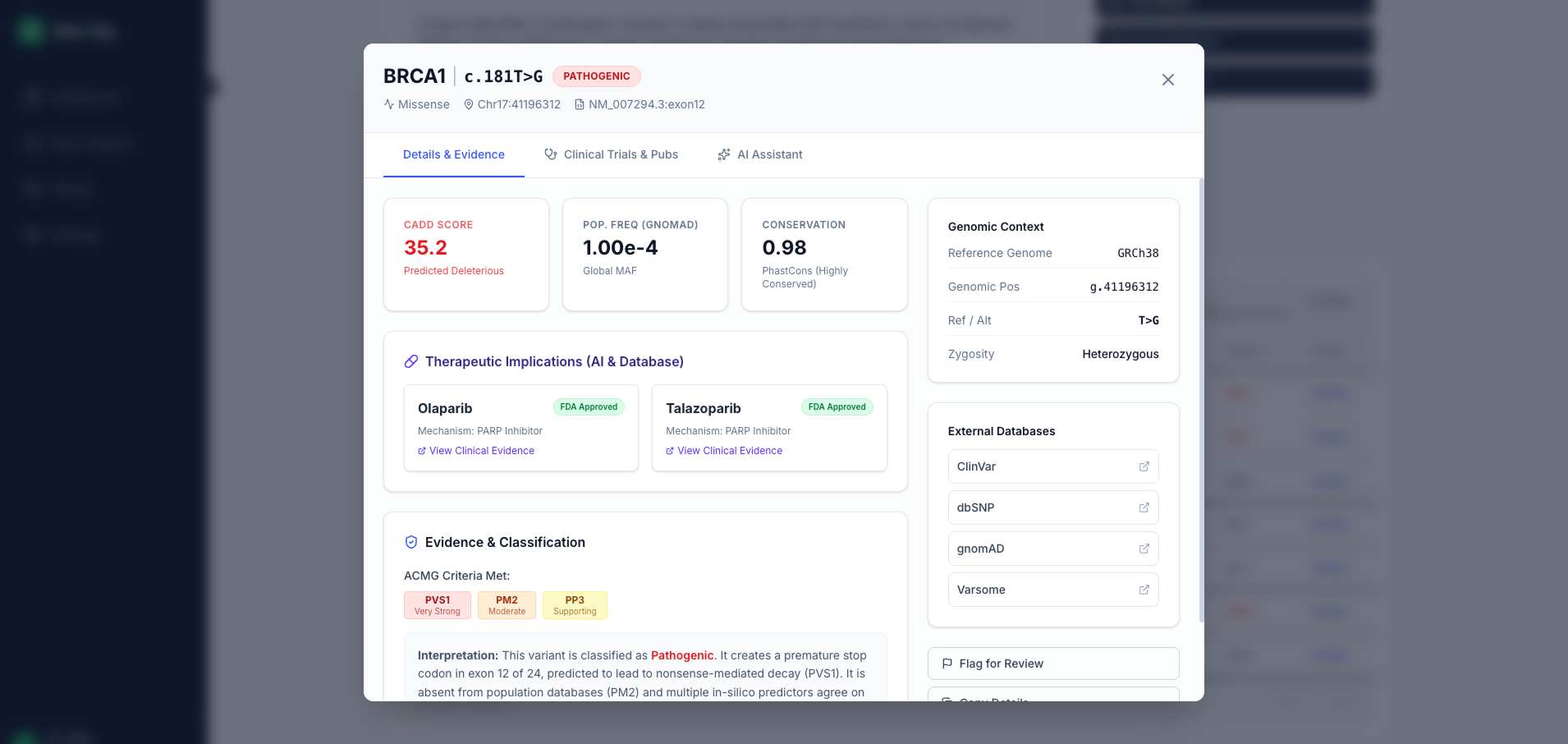
genomics laboratory software, this challenge intensifies. Variant classifications reference genome builds, transcript versions, and
evidence sources (e.g., ClinVar, ClinGen).
Patient presentation must simplify interpretation
while preserving traceability and avoiding clinical misrepresentation, consistent with FDA guidance on
genetic result communication.
Asynchronous and Stateful Result Workflows
Laboratory reporting is inherently iterative. Results may be:
- Preliminary
- Finalized
- Amended
- Corrected
- Reclassified months or years later
FHIR Diagnostic Report states exist precisely to model this reality. An effective genetic test result
delivery architecture must reflect these states in patient portals without triggering confusion or
premature clinical action.
This is a common failure mode in naive integrations.
Identity Resolution and Authorization
Laboratory systems, EHRs, and portals often use different identity schemes. Reconciling MRNs,
accession numbers, and patient accounts requires explicit identity resolution logic.
For
genetic testing software platforms, authorization becomes more complex:
SMART on FHIR and OAuth-based authorization models support these requirements, but most LIMS
platforms require an integration layer to bridge legacy authentication models with modern security
expectations.
Architecture Patterns That Work in Production
Event-Driven LIMS Integration
Event-driven LIMS integration is the most resilient pattern for clinical laboratories operating at
scale.
When laboratory state changes occur, events are published to a message bus. Downstream
services consume events independently:
- Result transformation
- Clinical validation workflows
- Patient portal notification
This approach:
- Decouples LIMS operations from portal availability
- Prevents data loss during outages
- Naturally satisfies LIMS audit trail requirements
Event sourcing also creates immutable histories, a critical requirement for HIPAA compliance
architecture.
FHIR-Based Interoperability Layer
Building a FHIR translation layer between LIMS and downstream systems future-proofs laboratory
platforms.
FHIR resources such as:
enable standardized data exchange across portals, EHRs, and analytics systems without bespoke
integrations for each consumer.
For clinical genomics workflows, the HL7 FHIR Genomics
Implementation Guide provides structured representations for variants, sequences, and
interpretations essential for long-term interoperability.
Layered Information Architecture
Patient portals must balance comprehension and clinical accuracy. A layered model is most effective:
- Patient summary layer
Plain-language explanations, trends, and visual indicators - Clinical detail layer
Methodology, annotations, historical comparisons - Technical data layer
Structured FHIR/HL7 resources for downstream systems
This requires integration platforms capable of maintaining multiple representations of the same
underlying data, a core
digital health product development
challenge.
Compliance and Governance Are Product Requirements
LIMS patient portal integration expands the compliance surface area significantly.Key requirements
include:Technology alone does not create production readiness.
Organizations that
successfully operate precision medicine platforms make several deliberate shifts:
- Encryption in transit and at rest
- Comprehensive access logging
- Role-based authorization
- Retention and disposal policies
HIPAA requires auditability of every access event, including patient views. For genomics data
integration, lineage tracking becomes critical as variants are reinterpreted over time. NIH-supported
ClinGen initiatives regularly update variant classifications, creating obligations for reinterpretation
workflows and patient re-contact.Most LIMS platforms do not support this level of lineage natively.
The integration layer must capture:
- Genome build
- Algorithm versions
- HIPAA-compliant software development
- Reference database timestamps
without compromising performance or usability.
Operational Readiness and Scalability
Laboratory volumes grow unpredictably. Integration architectures must scale from hundreds to tens of
thousands of results per day without redesign.
Production-grade platforms emphasize:
- Stateless services
- Horizontal scalability
- Queue-based load smoothing
- Real-time observability
FinOps benchmarks indicate that well-architected cloud-native integration platforms operate 40–60% more
efficiently than on-premise alternatives while improving reliability.
Monitoring must
track:
- End-to-end latency
- Message failure rates
- Data completeness
- Downstream availability
These metrics are essential for maintaining trust and regulatory defensibility.
Build, Buy, or Partner: A Strategic Decision
Commercial integration tools can address standard workflows, but often struggle with:
- Genomics data complexity
- Custom result logic
- Long-term platform evolution
Custom healthcare platform development
provides flexibility but requires deep expertise in:
- HL7 FHIR integration
- HIPAA-compliant software development
- clinical laboratory operations
Many labs adopt hybrid models, combining standards-based tooling with custom orchestration for
differentiation-critical workflows.
The determining factor is organizational readiness:
ownership capacity, compliance maturity, and long-term digital strategy.
Risk Assessment Before You Integrate
Before committing to architecture, labs should assess:
- Data quality foundations
- Identity and consent maturity
- Compliance infrastructure
- Operational ownership models
- Strategic intent (point solution vs platform)
Integration amplifies existing weaknesses. Early assessment reduces downstream rework and regulatory
exposure.
Frequently Asked Questions
How long does LIMS–portal integration take?
Simple integrations may take 3–4 months. Genomics-heavy, regulated environments typically require 6–12 months, including validation and operational readiness.
What are the most common causes of failure?
Data quality issues, identity mismatches, compliance gaps, and underestimating post-launch maintenance.
Can this support genetic counseling workflows?
Yes, but only with explicit state management, result holds, and release controls built into the platform.

Integration as a Digital Product Capability
Integrating LIMS with patient-facing portals is not a one-time project. It is a long-term healthcare
platform development commitment that affects compliance posture, operational efficiency, and patient
trust.
Labs that succeed treat this work as digital product development:
- Platform-oriented
- Governance-first
- Interoperability-driven
- Strategic intent (point solution vs platform)
For organizations supporting genomics, molecular diagnostics, or precision medicine initiatives, these
architectural decisions will shape competitiveness and resilience for years to come.
Engaging
engineering partners with production experience in regulated healthcare environments provides clarity on
tradeoffs, risks, and scalable paths forward before integration decisions become irreversible.
NonStop
develops
healthcare software platforms
and
digital product development services
for laboratories, health systems, and life sciences organizations. With deep expertise in genomics data
engineering, HIPAA-compliant software development, and clinical integration architecture, NonStop
partners with organizations building production-ready laboratory informatics platforms. To discuss your
laboratory's digital integration needs or request a technical assessment of your current architecture,
reach out through our website.