
Newsletter

Orchestration for Genomics Labs and Agentic AI

Why genomics labs need an intelligent orchestration layer between LIMS, EHR, billing, and payers before deploying agentic AI into real production workflows.
Orchestration for Genomics Labs and Agentic AI
Resource Overview

Orchestration for Genomics Labs and Agentic AI

June 2026

Orchestration for Genomics Labs and Agentic AI

*, *::before, *::after { box-sizing: border-box; margin: 0; padding: 0; }body { font-family: 'Inter', sans-serif; background: #ffffff; color: #1a1a1a; line-height: 1.7; -webkit-font-smoothing: antialiased; }/* WRAPPER */ .content-wrap { max-width: 1080px; margin: 0 auto; background: #ffffff; }/* INTRO SECTION */ .intro-banner { width: 100%; background: linear-gradient(135deg, #0a2e38 0%, #0d3d4a 40%, #0f4a58 70%, #1a5c6e 100%); } .intro-section { max-width: 1080px; margin: 0 auto; padding: 40px 40px; } .intro-title { font-size: 1.75rem; font-weight: 800; color: #ffffff; line-height: 1.25; margin-bottom: 8px; } .intro-subtitle { font-size: .95rem; color: #a0c8bc; line-height: 1.5; }/* BODY */ .body-content { padding: 0 40px 40px; }/* CEO SECTION */ .ceo-section { padding: 36px 0 28px; border-bottom: 1px solid #e8e8e8; } .ceo-heading { font-size: 1.75rem; font-weight: 800; color: #1a1a1a; margin-bottom: 24px; line-height: 1.2; } .ceo-grid { display: grid; grid-template-columns: 1fr 320px; gap: 28px; align-items: center; } .ceo-grid p { font-size: .97rem; color: #3a3a3a; line-height: 1.78; margin-bottom: 14px; } .ceo-grid p:last-child { margin-bottom: 0; } .ceo-photo-wrap { text-align: center; } .ceo-photo { width: 100%; border-radius: 4px; display: block; margin-bottom: 10px; border: 1px solid #e0e0e0; background: #ddeee9; min-height: 180px; object-fit: cover; } .ceo-photo-placeholder { width: 100%; border-radius: 4px; background: linear-gradient(135deg, #e6f7f1, #c5e8d8); min-height: 200px; display: flex; align-items: center; justify-content: center; color: #059D66; font-size: .8rem; font-weight: 600; text-align: center; padding: 20px; margin-bottom: 10px; border: 1px solid #b8e8d5; } .ceo-name { font-size: .88rem; color: #1a1a1a; font-weight: 600; text-align: center; margin-bottom: 2px; } .ceo-title-text { font-size: .78rem; color: #6a6a6a; text-align: center; line-height: 1.4; } .ceo-full-text { margin-top: 20px; } .ceo-full-text p { font-size: .97rem; color: #3a3a3a; line-height: 1.78; margin-bottom: 14px; } .ceo-full-text p:last-child { margin-bottom: 0; }/* ARTICLE SECTION */ .article-section { padding: 32px 0; border-bottom: 1px solid #e8e8e8; }.article-img-banner { width: 100%; border-radius: 4px; overflow: hidden; background: linear-gradient(135deg, rgba(10,20,30,0.35) 0%, rgba(10,50,65,0.25) 100%), url('https://nonstopio.com/wp-content/uploads/2026/07/June-newsletter-scientists-lab-coats-collaborating-computers-demonstrating-teamwork-research-setting-scaled.jpg') center center / cover no-repeat; padding: 40px 32px; margin-bottom: 24px; position: relative; min-height: 220px; display: flex; align-items: center; } .article-img-overlay { background: rgba(255,255,255,0.95); padding: 20px 24px; display: inline-block; max-width: 70%; } .article-img-overlay h2 { font-size: 1.1rem; font-weight: 800; color: #1a1a1a; line-height: 1.35; letter-spacing: -.01em; }.article-body p { font-size: .97rem; color: #3a3a3a; line-height: 1.78; margin-bottom: 16px; } .article-body p:last-child { margin-bottom: 0; }/* SIDE IMAGE + TEXT */ .side-grid { display: grid; grid-template-columns: 340px 1fr; gap: 20px; align-items: start; margin: 20px 0; } .side-img-placeholder { width: 100%; border-radius: 4px; height: 160px; display: block; object-fit: cover; } .side-text p { font-size: .97rem; color: #3a3a3a; line-height: 1.78; margin-bottom: 12px; }/* GREEN CALLOUT */ .green-callout { background: #059D66; padding: 22px 26px; margin: 24px 0; border-radius: 2px; } .green-callout p { font-size: 1rem; font-weight: 700; color: #ffffff; line-height: 1.6; margin: 0; }/* NUMBERED 2-COL LIST */ .num-grid { display: grid; grid-template-columns: 1fr 1fr; gap: 0 24px; margin: 20px 0; border: 1px solid #e8e8e8; } .num-item { padding: 18px 20px; border-bottom: 1px solid #e8e8e8; display: flex; gap: 10px; align-items: start; } .num-item:nth-last-child(-n+2) { border-bottom: none; } .num-item-n { font-size: .88rem; font-weight: 700; color: #059D66; flex-shrink: 0; min-width: 20px; } .num-item p { font-size: .9rem; color: #3a3a3a; line-height: 1.65; margin: 0; }/* BTN */ .btn-wrap { text-align: center; margin: 24px 0; } .btn-green { display: inline-block; background: #059D66; color: #fff; text-decoration: none; padding: 14px 36px; border-radius: 2px; font-weight: 600; font-size: .95rem; letter-spacing: .02em; }/* SOLUTIONS SECTION */ .solutions-section { padding: 32px 0; border-bottom: 1px solid #e8e8e8; } .solutions-section h2 { font-size: 1.6rem; font-weight: 800; color: #1a1a1a; margin-bottom: 10px; line-height: 1.2; } .solutions-section > p { font-size: .97rem; color: #3a3a3a; line-height: 1.7; margin-bottom: 24px; } .solution-grid { display: grid; grid-template-columns: 1fr 1fr; gap: 0 32px; } .solution-item { padding: 4px 0; } .solution-item-name { font-size: .97rem; color: #1a1a1a; margin-bottom: 10px; line-height: 1.5; } .solution-item-name strong { color: #1a1a1a; } .solution-item ul { padding-left: 18px; list-style-type: disc; margin-bottom: 4px; } .solution-item ul li { font-size: .9rem; color: #3a3a3a; margin-bottom: 6px; line-height: 1.6; } .solutions-scoping { font-size: .93rem; color: #3a3a3a; line-height: 1.7; margin-top: 16px; }/* WHATS NEXT */ .next-section { padding: 28px 0; } .next-section h2 { font-size: 1.1rem; font-weight: 700; color: #1a1a1a; margin-bottom: 12px; } .next-section p { font-size: .95rem; color: #3a3a3a; line-height: 1.78; }/* DIVIDER */ .divider { height: 1px; background: #1a1a1a; margin: 8px 0 24px; }@media (max-width: 600px) { .body-content { padding: 0 20px 32px; } .intro-section { padding: 28px 20px 8px; } .intro-title { font-size: 1.4rem; } .ceo-grid { grid-template-columns: 1fr; } .side-grid { grid-template-columns: 1fr; } .num-grid { grid-template-columns: 1fr; } .solution-grid { grid-template-columns: 1fr; } }

From the Desk of the CEO

In most genomics labs, the hard work now is less about sequencing and more about keeping the workflow between systems from slowing everything down. AI agents are starting to enter those conversations, but the question that matters is whether the workflows underneath them are stable enough to trust.

This month, we're sharing a view of that orchestration layer and some of the places where labs are trying to get time back for scientists by fixing handoffs instead of just adding more tools. We're also introducing six focused solutions that show, step by step, how small fixes in your intake-to-report workflow can free capacity, protect turnaround times, and reduce the day-to-day coordination burden on your team.

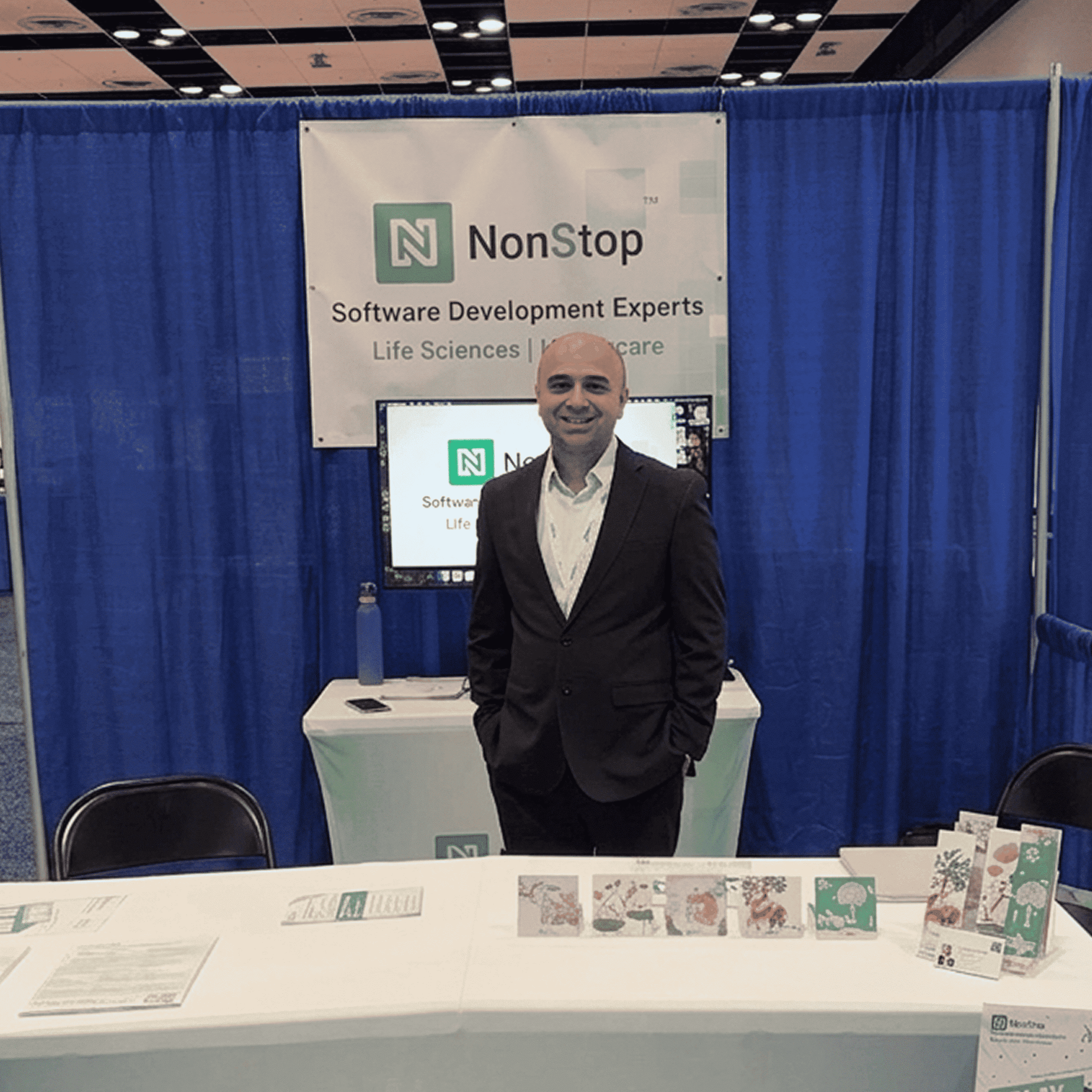
I'll be at the ADLM Annual Meeting this year, July 26–30, in Anaheim, CA, USA, at Booth #4264. If you're there and want to compare notes on where your lab is with workflow and AI, I'd be glad to talk.

Why Genomics Labs Need an Intelligent Orchestration Layer Before AI Agents Work in Production

The hold-up in most genomics labs is not really the systems. It is everything that happens between them.

Right now, a lot of labs are trying to figure out where AI agents fit, what they can lift off people's plates, and how much faster things might move. Those are fair questions. But the more useful one sits underneath them: is the workflow even ready for an agent to touch it?

In genomics, the slow part is rarely the sequencing. The delay usually lives in the gaps between systems, where work sits, waits, and passes from one person to the next. And that matters when lab results drive clinical decisions, and turnaround-time complaints are still common across labs.

Most labs already have the core systems in place: LIMS, EHR, billing, payer platforms, all of it. The trouble is that the glue between them is still a person. Someone is chasing a sample exception over email. Someone is pulling the clinical context by hand before a report goes out. Someone is catching a missing pre-auth only after the claim has already bounced. The systems may run fine. It is the seams that slow everything down.

This is where agents get oversold. They can take on coordination work, but they cannot hold a lab workflow together on their own. Dropped into disconnected systems with no shared context and no guardrails, an agent does not make the process safer. It moves bad data faster and makes the decision trail harder to follow.

Lab scientist at workstation

The numbers tell the same story. In Deloitte's 2026 outlook, more than 80% of health care executives expect generative and agentic AI to deliver moderate to significant value this year, and 61% are already building agentic initiatives or have a budget set aside. Yet only about 2% have deployed AI across the whole enterprise, while roughly 30% run it at scale in just a few select areas. The appetite is real. The production footprint is not there yet. Plenty of organizations launch a proof of concept and then stall trying to scale it, because the infrastructure to run it across functions was never built first.

So what does orchestration actually have to do? In genomics, it has to handle the practical things that generic tools tend to miss:

1.

Keep the variant call, its ACMG/AMP classification, and the supporting evidence tied together, so provenance stays intact at sign-out.

2.

Bring clinical context into the report before it is finalized, not after someone has already acted on it.

3.

Log every automated step with timestamps and a clean audit trail built for CAP, CLIA, and HIPAA.

4.

Keep payer pre-authorization and CPT/ICD coding logic inside the workflow, not scattered across spreadsheets and side conversations.

That last point is where polished demos fall apart. A demo answers a question. Production has to move clinical and financial work across several systems without dropping a step, and prove that it did. Prior authorization is the clearest case: Deloitte flags it as one of the administrative bottlenecks most worth fixing, and it is exactly the kind of multi-system handoff an agent cannot manage without orchestration underneath.

To be clear, orchestration is not magic. It will not fix a broken assay, make an unvalidated model safe, or replace the bioinformatician at sign-out. The labs that pull ahead are the ones where scientists spend less time coordinating work and more time on interpretation, validation, and the judgment calls only people can make. Agents handle the routing. The audit trail stays clean. The experts stay focused on the decisions that count.

NonStop works with genomics and diagnostics teams on exactly this layer. For anyone weighing where agents actually fit, NonStop runs a 45-minute architecture review: an honest read on what is worth orchestrating and what to fix first. No pitch.

Ways Genomics Labs Get Time Back

From intake to report, six focused solutions target the exact bottlenecks in a genomics lab and give back hours and weeks of expert time.

SmartReq: An Intelligent patient requisition form extraction solution
  • ~90% intake time eliminated
  • Under 2 minutes per form, near-zero entry errors, full audit log
Intergenix: A modern LIMS-EHR interoperability solution
  • ~80% integration effort cut
  • Zero manual re-entry, 8–12 hours per week saved

Book a 15-minute scoping call. Walk through your current stack and identify which bottleneck is worth closing first.

What's next

Agentic AI is starting to move from "bots you talk to" into agents that actually live inside governed lab workflows, coordinating steps across LIMS, ELN, and EHR under clear guardrails. This shift will determine whether AI can safely take on real work in genomics labs, not just side tasks, and it's the space we'll be exploring next.