Feature Topic
Forward Deployment Engineering for Genomics Labs

Agentic AI in genomics is starting to change shape. It is moving from “bots you talk to” into agents that live inside governed lab workflows, coordinating steps across LIMS, EHR, and billing under clear guardrails. The question for most genomics labs is no longer whether to try agents in a pilot, but whether their workflows are ready for agents to take on real work without compromising safety, auditability, or turnaround time.
CEO, NonStop io Technologies
At NonStop, the focus is on that readiness layer: making sure the workflows between your existing systems are clean, traceable, and orchestrated before any agent is allowed to act inside them.
This issue looks at what “governed workflows” actually mean in a genomics lab and how to pick the first agent use cases that deliver value without putting clinical decisions or payor relationships at risk.

Most labs have already experimented with AI assistants that summarize reports, draft emails, or help search through data. Agentic AI is different: these agents can plan and execute multi-step workflows, call internal tools, and make routing decisions inside your systems, not just around them.
That power is useful only if the workflows underneath are governed, with clear permissions, shared context, and an audit trail that shows what the agent did, when, and why.
In genomics, governed workflows mean a few concrete things:
With those foundations in place, agents can take on tightly scoped tasks:
Triaging samples and routing exceptions across systems.
Assembling audit packs for internal or external review.
Coordinating payor pre-auth steps, handing off edge cases to humans.
The practical question is not “Should we use agents?” but “Which workflows are governed well enough for an agent to help, and which still rely on tribal knowledge and email threads?” Labs that answer honestly tend to start small, with one workflow, tight guardrails, and clear success metrics, then widen scope only after the first agent proves it can operate as a supervised coworker, not a black box.
NonStop’s genomics solutions serve as the governed workflow surfaces where agentic AI can actually help:
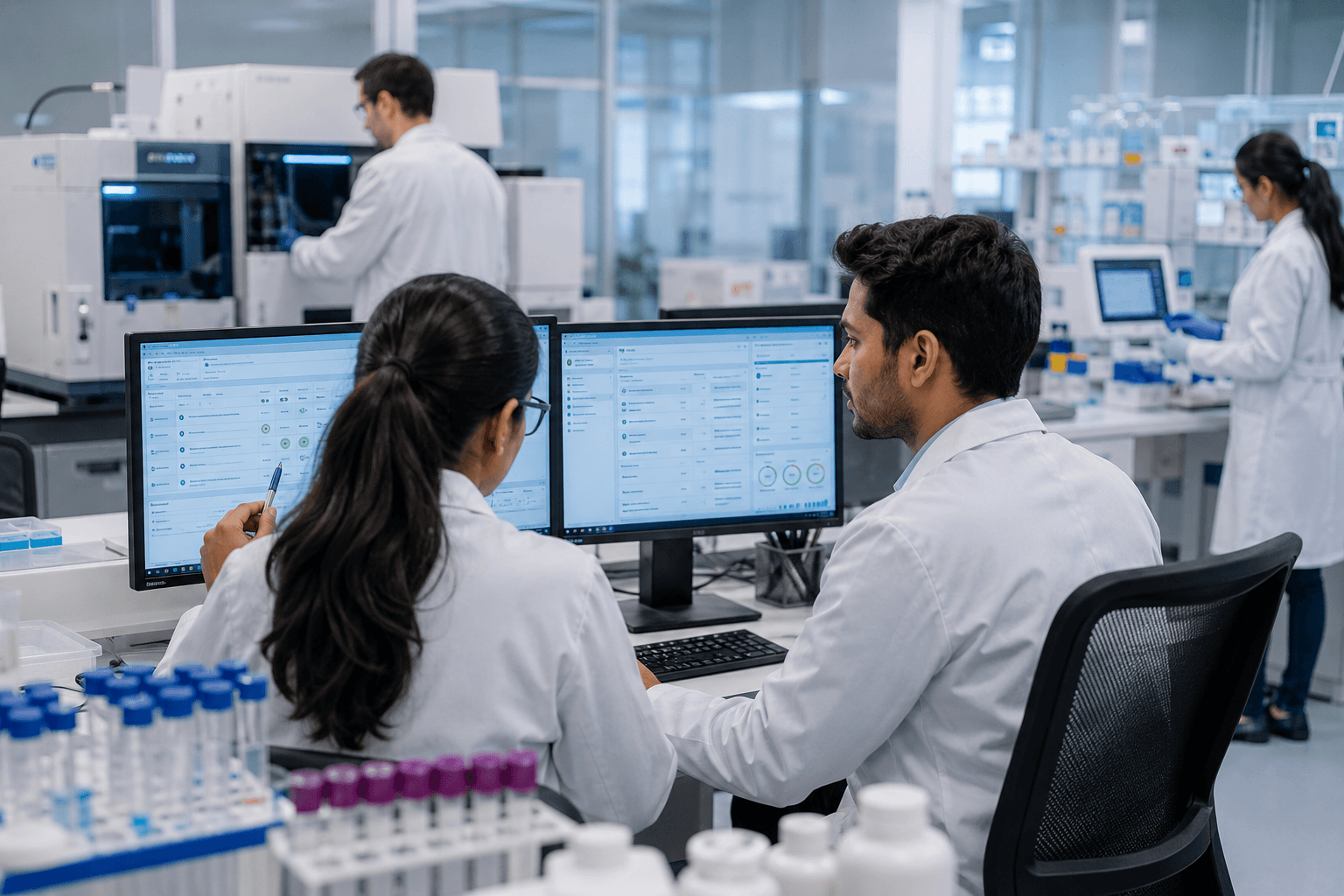
Intake & Requisition (SmartReq)
Turning noisy patient requisitions into structured, validated intake with a full audit log means agents can reliably triage, route, and prioritize cases instead of guessing from PDFs and emails.
Order Quality & EHR Intake (Intergenix)
When incomplete or duplicate EHR orders are caught before they reach the lab, agents can flag and route exceptions automatically instead of a human catching the problem downstream, protecting turnaround time and revenue tied to a clean order.
If you’re evaluating agentic AI, start by mapping your lab’s intake and order-quality workflows first. They’re usually the fastest place to get governed enough for an agent to help safely. NonStop offers a 45-minute architecture review to highlight which workflows are ready, which need orchestration first, and where small changes can free the most expert time.
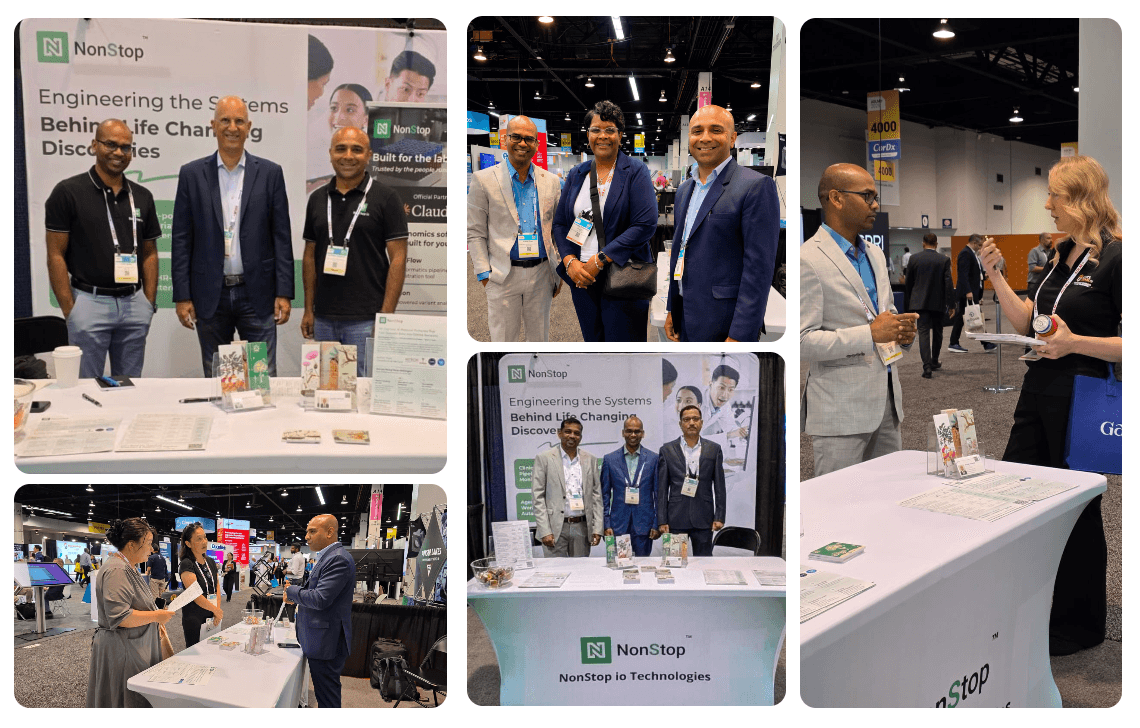
This year’s ADLM Annual Meeting in Anaheim brought together thousands of laboratory medicine and diagnostics professionals to explore where the field is headed next, from automation and AI to new models of lab operations and regulation.
NonStop participated in the meeting. It was a chance to hear how peers are modernizing clinical and genomics workflows, see lab-ready technologies up close, and have honest conversations about what will make day-to-day work safer, faster, and more sustainable.