

The global bioinformatics market generated $8,614.29 million in 2019 and is projected to reach $24,731.61 million by 2027, growing at a CAGR of 13.4% from 2020 to 2027 (source).
Yet despite this growth, most organisations stumble on a far more basic problem. Not how to design algorithms. Not how to analyse data. But how to run their computational workflows reliably in production?
This gap between analysis and execution is where most bioinformatics efforts quietly struggle, and where real business impact is either created or lost.
Let us start by understanding why this deployment problem exists, especially in the era of cloud computing. The root of the issue often lies in how we define workflows and pipelines in bioinformatics.
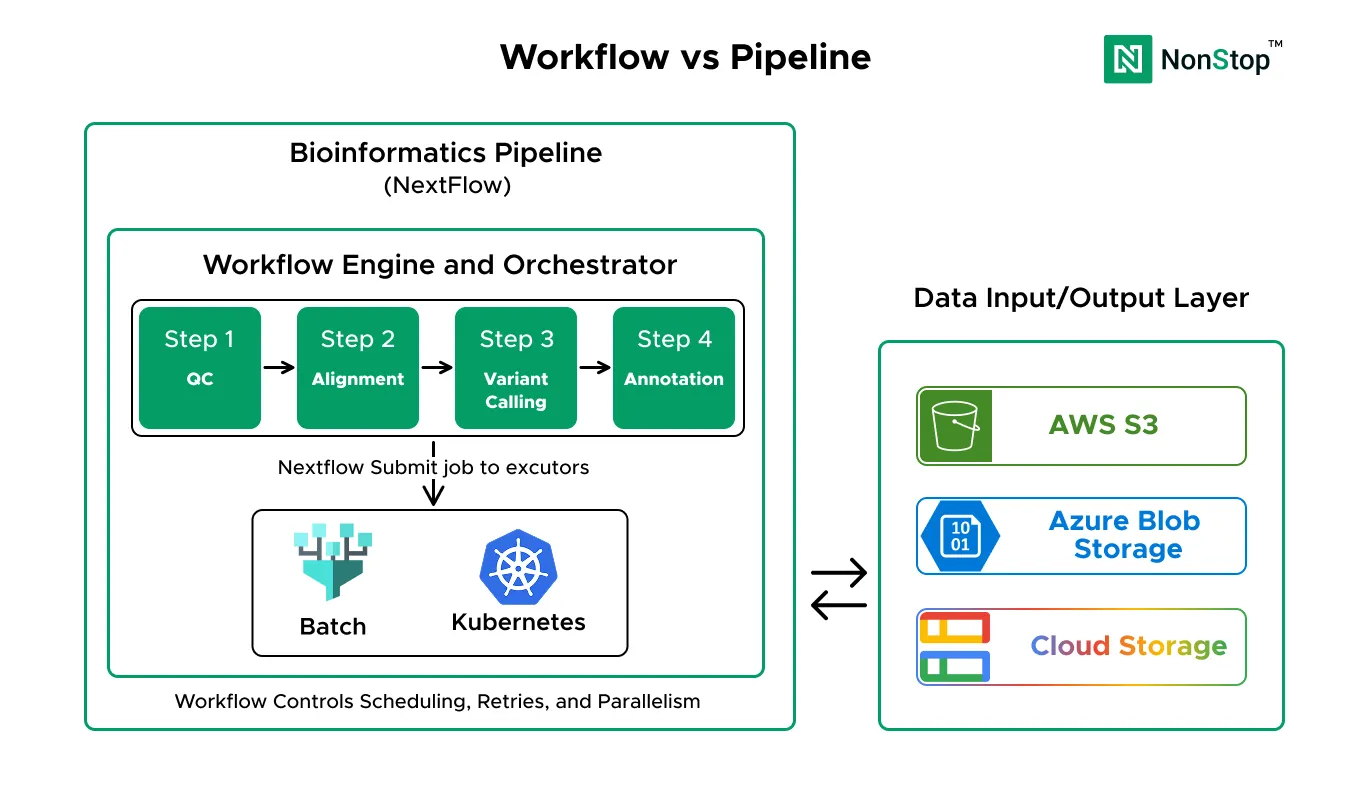
The Real Problem: Workflows vs Pipelines
Before diving into the criteria, it's worth understanding what's actually at stake.
In traditional software development, a bad vendor choice might mean delays, budget overruns, or technical debt. In genomics and healthcare, the consequences compound:
Why it matters:
Genomics software development is not general-purpose software engineering. The domain complexity is extraordinary: understanding NGS workflows, variant calling pipelines, annotation databases, clinical interpretation frameworks (ACMG/AMP guidelines), and lab reporting standards requires years of hands-on experience.
What to look for:
Questions to ask:
If they can't speak fluently about these topics, they're not domain-ready.
Why it matters:
Genomics software operating in clinical settings is subject to HIPAA, potentially FDA oversight (if it provides clinical decision support or diagnostic outputs), regulations (if integrated with lab workflows), and state-specific genetic privacy laws.
A partner who treats compliance as an afterthought will deliver software that:
What to look for:
Questions to ask:
If they say we'll add compliance later, walk away.
Why it matters:
Genomics data is massive. A single whole genome generates 100-200 GB of raw data. Clinical labs processing hundreds or thousands of samples per month generate petabytes annually.
Your partner must architect for:
What to look for:
Architecture red flags:
Questions to ask:
Why it matters:
Genomics software rarely operates in isolation. Clinical genomics workflows require:
A partner without interoperability experience will:
What to look for:
Questions to ask:
If they've only built standalone tools, interoperability will be a painful learning curve.
Why it matters:
Genomic data is among the most sensitive data types. It's immutable, identifiable, and reveals information about biological relatives. A breach has lifetime consequences for patients.
Your partner must embed security throughout the development lifecycle:
What to look for:
Questions to ask:
If security isn't mentioned until you bring it up, it's not part of their culture.
Why it matters:
Genomics projects are complex, and requirements often evolve as you learn. Your partner's engagement model must support:
What to look for:
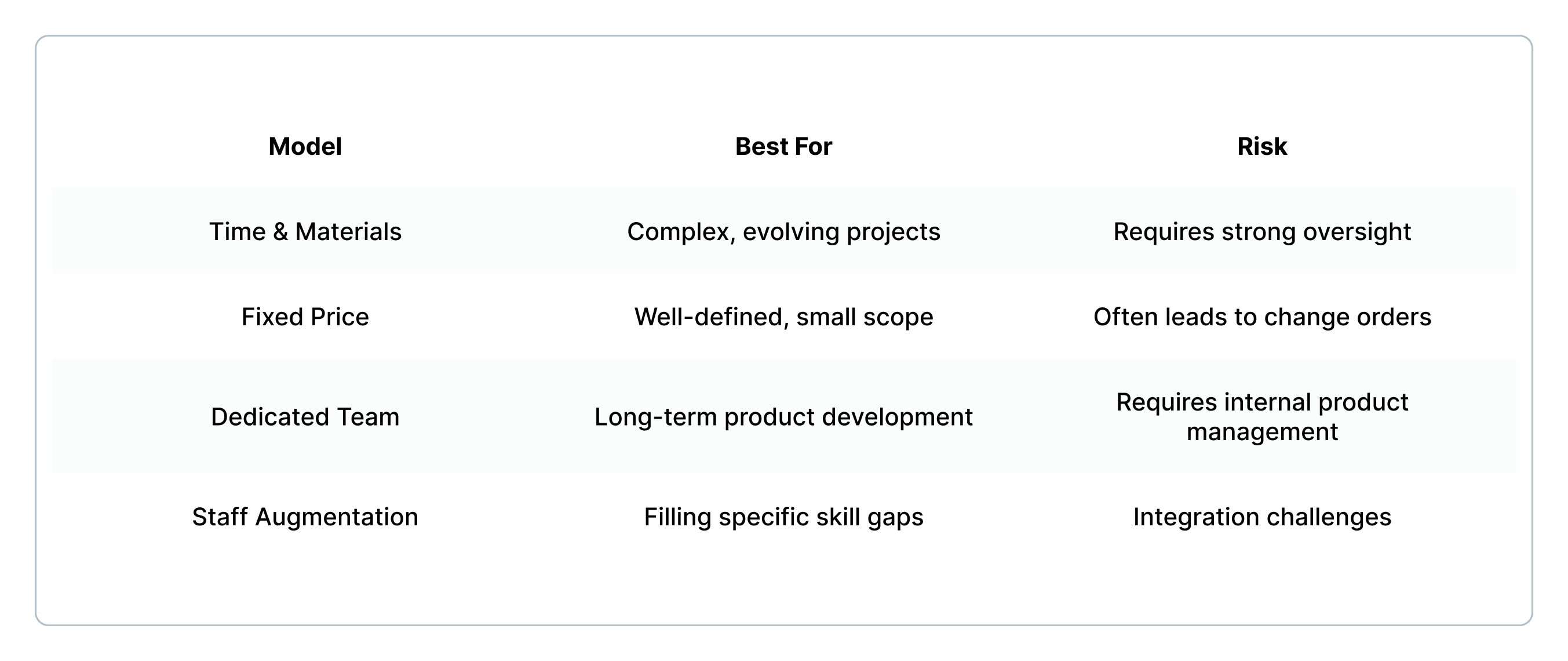
Engagement models to consider:
Questions to ask:
Why it matters:
Genomics platforms must be reliable, maintainable, and deployable across environments. Your partner should implement:
What to look for:
Questions to ask:
Why it matters:
In clinical genomics, software errors can lead to misdiagnosis. Robust testing is non-negotiable:
What to look for:
Questions to ask:
Why it matters:
You're not just buying a v1.0 product. You're building a platform that will evolve for years. Your partner must deliver:
What to look for:
Questions to ask:
If they can't speak fluently about these topics, they're not domain-ready.
Why it matters:
You'll work closely with this team for months or years. Cultural alignment matters:
What to look for:
Questions to ask:
Why it matters:
Software doesn't end at launch. You need:
What to look for:
Questions to ask:
Why it matters:
You're making a long-term bet. Your partner must be financially stable with a track record of successful delivery.
What to look for:
Questions to ask:
Use this scorecard to evaluate potential partners:
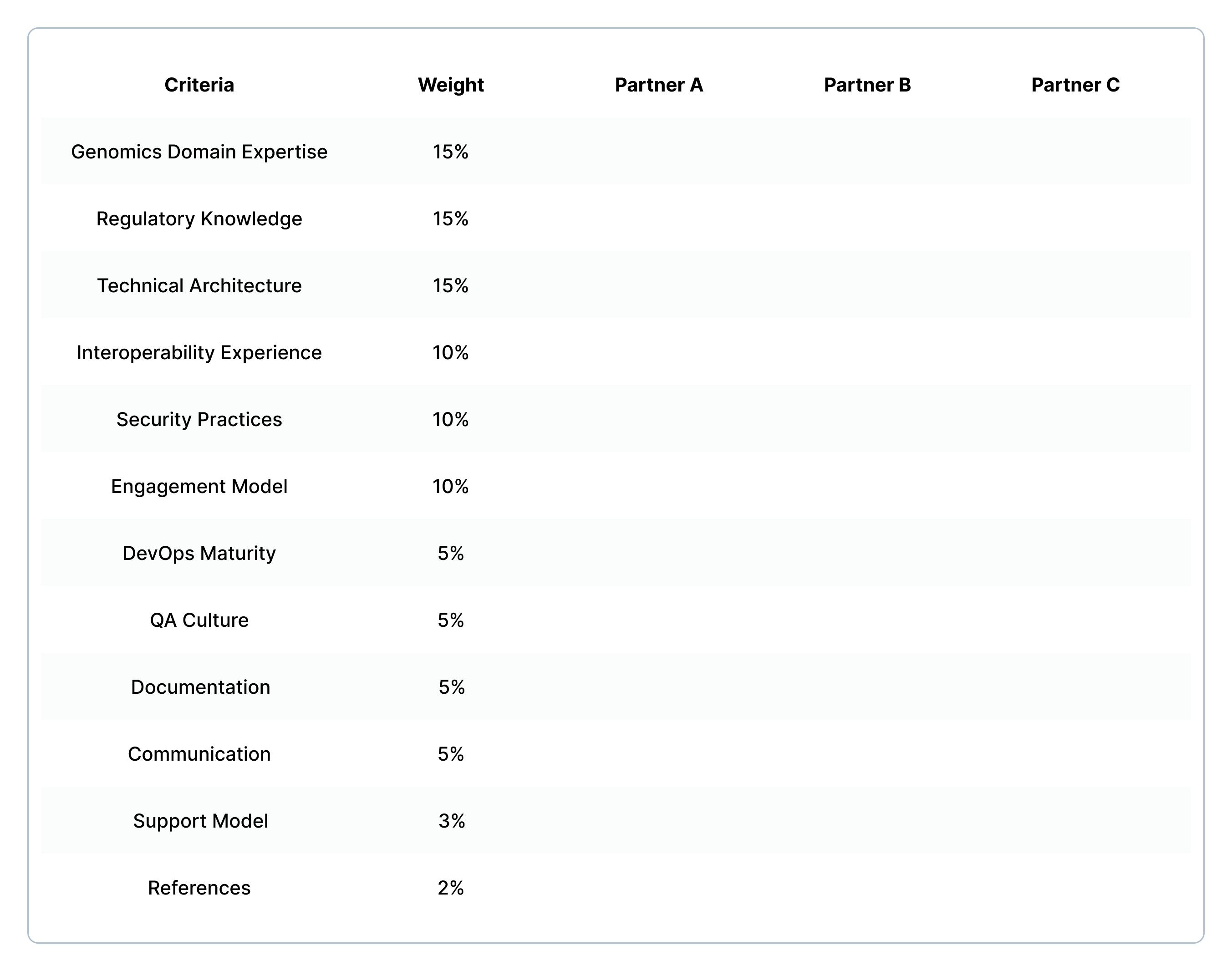
Score each partner 1-5 on each criterion. Multiply by weight - total scores out of 5.
The cheapest partner is rarely the best value. Rebuilding after a failed project costs far more than hiring the right team upfront.
General software development skills don't translate directly to genomics. The learning curve is steep and expensive.
Always speak to past clients. Ask about communication, problem-solving, and post-launch support.
Don't just meet the sales team. Interview the actual architects and developers who will work on your project.
Define what success looks like before you start: timelines, quality metrics, performance benchmarks, and compliance requirements.
Choosing a genomics software development partner is not a procurement decision; it's a strategic partnership that shapes your organization's ability to deliver precision medicine, accelerate research, and compete in a rapidly evolving landscape.
The right partner brings more than technical skills. They bring domain wisdom, regulatory foresight, architectural maturity, and a collaborative mindset that makes them an extension of your team.
The 12 non-negotiables outlined in this article provide a framework for making that choice with confidence. Use them to evaluate partners rigorously, ask hard questions, and ultimately select a team that can deliver not just software, but a platform that scales, complies, integrates, and endures.
If your team is exploring modernizing LIMS workflows, building cloud-native genomics tools, or integrating EHR/LIMS systems with AI and compliance built in, NonStop is always open to a conversation. We've spent over a decade helping genomics and healthcare organizations design, engineer, and scale platforms that last.


