August 2026

Forward-Deployed Engineering: What Labs Need to Know

From the Desk of the CEO

Most lab technology projects do not struggle because someone chose the wrong tool. They struggle in the stretch between “the demo worked” and “this now has to run every day.”

That is where incomplete orders surface, interfaces behave differently than expected, pipeline exceptions pile up, and a small reporting change suddenly affects operations, quality, and billing. The forward-deployed engineering conversation is growing because it puts technical people in that stretch of the work, not only at selection or implementation, but through the messy part of making a workflow reliable in production.

This issue looks at what an FDE actually does, what a lab should expect from one, and the questions worth asking before bringing an embedded engineering team into a clinical or genomics environment.


FDE: More Than an Embedded Engineer

A forward-deployed engineer (FDE) is a customer-facing engineer who works alongside a lab or health system to build, adapt, integrate, and operate software in its real production environment.

A forward-deployed engineer is not valuable simply because they are “embedded” with a lab or health system. Their value is in owning the difficult delivery path:

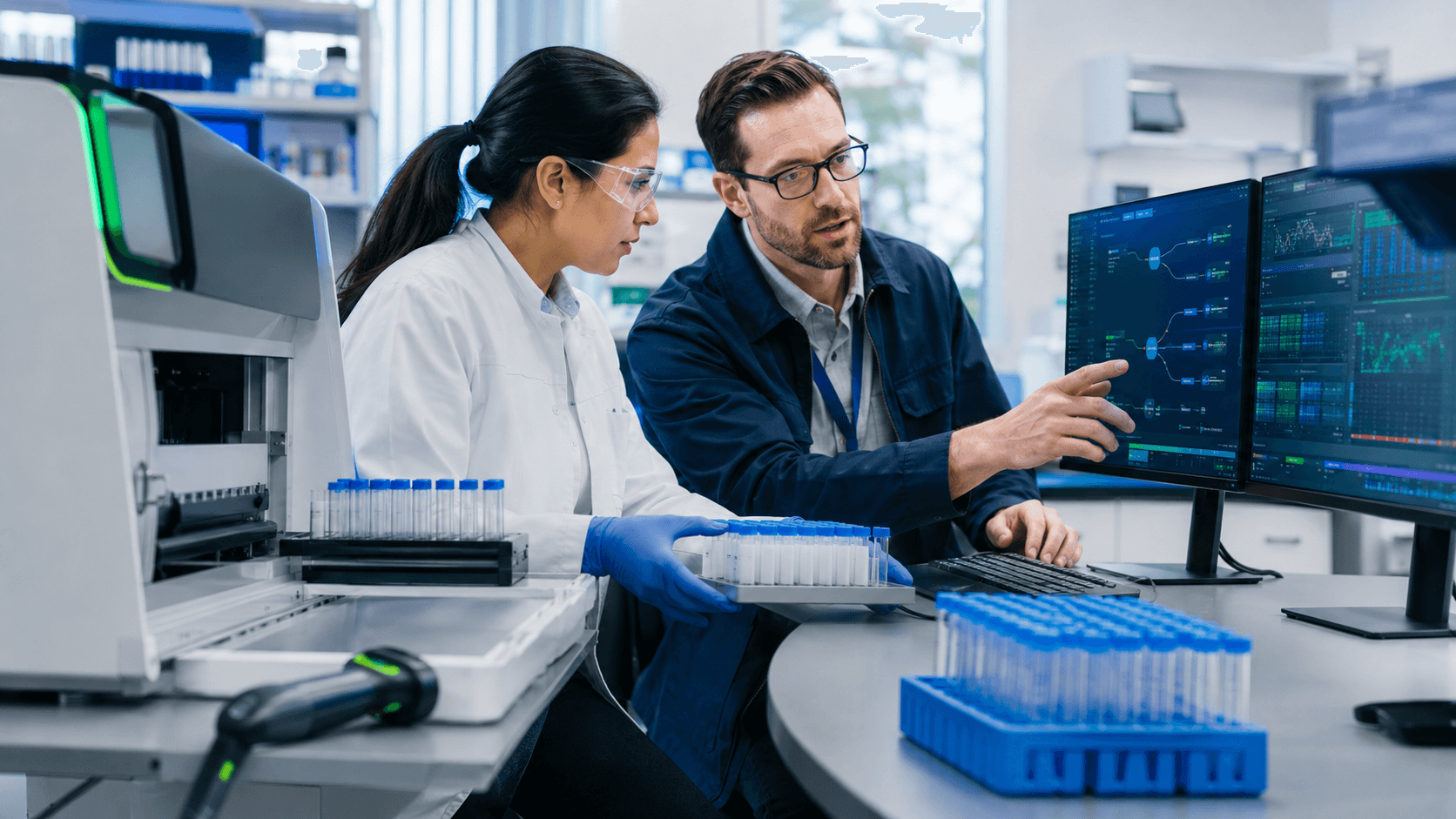
Forward-deployed engineer working with lab staff

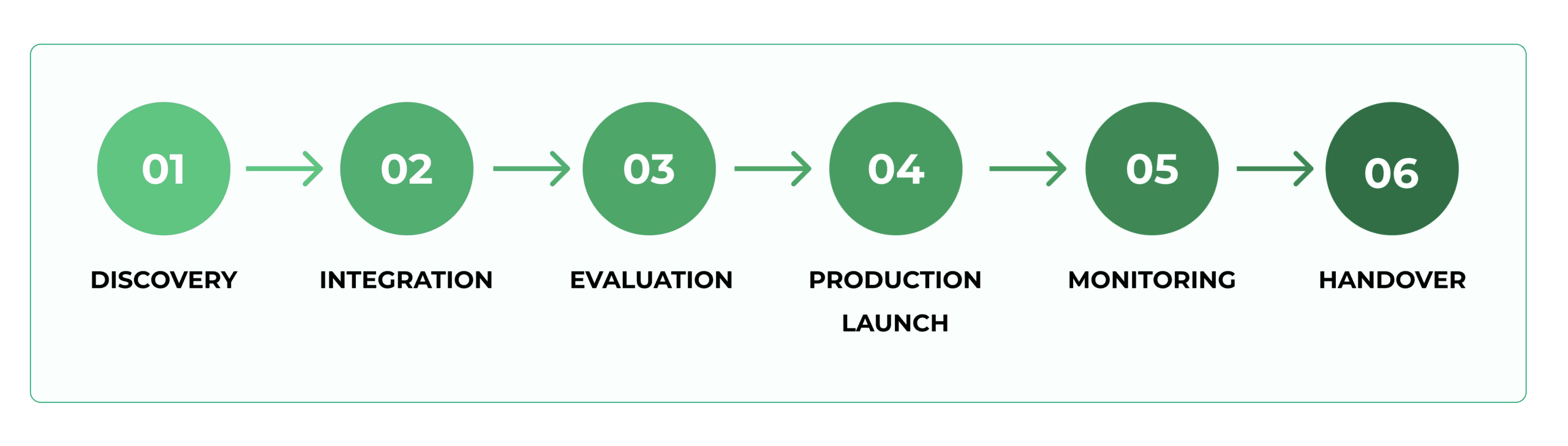
Healthcare FDE roles are increasingly defined around that full lifecycle: working with clinical and technical users to find a high-value workflow, building the required data and system connections, evaluating the solution against agreed criteria, deploying it safely, monitoring it in use, and transferring operational ownership to the customer team.

Production lifecycle: Discovery, Integration, Evaluation, Production Launch, Monitoring, and Handover

That is different from a traditional software handoff. A platform can be configured and technically “live” while the actual lab workflow still depends on spreadsheets, manual checks, or a single person who knows how to fix the exceptions. An FDE’s job is to close that gap.

The Production Lifecycle
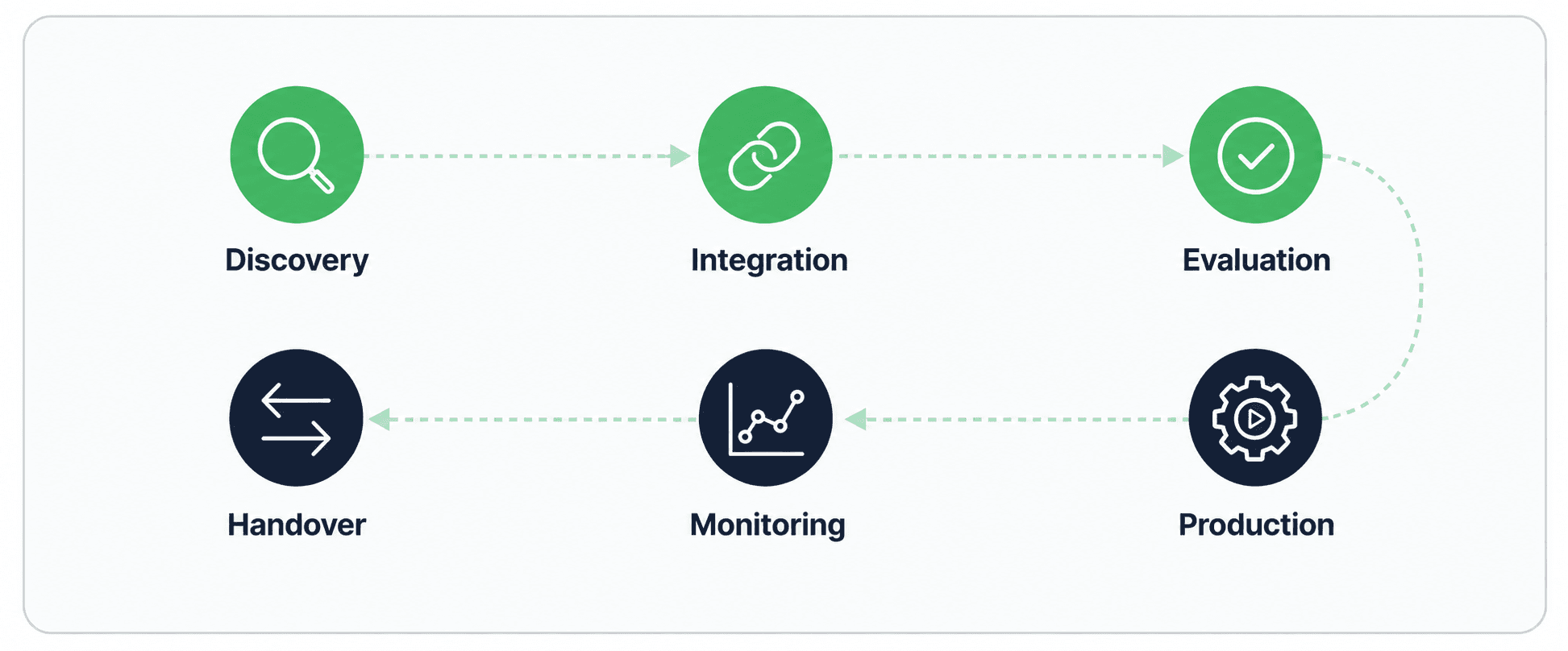
The Production Lifecycle: Discovery, Integration, Evaluation, Production, Monitoring, and Handover
1
Find the workflow worth fixing

The first job is not to start building. It is to identify a real constraint: incomplete orders, a brittle LIMS-to-pipeline handoff, recurring report rework, or a growing exception queue. A useful outcome is a narrow problem statement, named workflow owners, a baseline metric, and a decision about what should remain human-led.

2
Make the workflow work with reality

This is where an engineer works with the actual systems and data: LIMS, EHR, pipeline tools, reporting platforms, and billing or payer workflows. In genomics, the hard part is usually the surrounding context, not a single API. It is the order that lacks phenotype data, the interface message that varies by source, the pipeline run that requires manual intervention, or the test change that affects the report template.

3
Agree on proof before launch

Before production, a lab should be able to answer:

What result would prove this workflow is working?
What level of completeness, accuracy, and reliability is acceptable?
Which cases require human review or escalation?
How will the team test failures, not just happy paths?

For an AI-supported workflow, evaluation should include not only technical performance but also the quality of the human handoff, exception route, and decision record.

4
Release in small, controlled steps

A good deployment is rarely a single cutover. It begins with a narrow scope, named users, defined change control, and a practical rollback plan. The lab needs clarity on who approves changes, who responds to incidents, and what happens if a system behaves unexpectedly. This is especially important where the workflow touches patient data, clinical reports, or billing.

5
Learn from real use

Go-live is not the end of delivery. The real evidence begins once actual volume reaches the system. Labs should monitor what is operationally meaningful: interface failures, data-quality errors, queue growth, turnaround time, manual workarounds, user corrections, and unresolved exceptions. This turns production feedback into the next improvement cycle, rather than leaving users to work around the same problem.

6
Leave the lab stronger

The final measure of a good FDE engagement is not how dependent the lab becomes on the engineer. It is whether the lab gains clear documentation, configuration and code ownership, data mappings, validation evidence, monitoring procedures, and the confidence to operate and change the workflow responsibly.

Questions Worth Asking Any FDE Team

Ask ThisLook For This
What workflow will we improve first?A specific constraint, named owners, and a baseline
How will you define “ready for production”?Acceptance criteria, failure testing, review points, and approval gates
What will be measured after launch?Reliability, exceptions, turnaround time, rework, and user adoption
How will you handle access to systems and PHI?Minimum-necessary access, named accounts, logging, and revocation
What will remain with our team?Documentation, ownership, training, operating procedures, and handover

Why It Matters Now

FDE demand has grown sharply as organizations move from AI pilots to systems that must work inside real clinical and operational environments.

70%
of companies planned to hire FDEs by the end of Q2 2026, up from just 5-10% at the start of the year. TechCrunch, July 2026

For genomics labs, the point is not to adopt the title because it is popular. It is to use the lifecycle as a test for any technology partner: Can they help discover the right workflow, integrate it, prove it works, operate it in production, and hand it over cleanly?

NonStop is a Registered Anthropic AI Partner, bringing the same forward-deployed mindset to AI-enabled workflows: pairing model capability with the integration, evaluation, human review, and operational ownership required for production use.

When Outside Engineering Helps

Forward-deployed engineering is most useful when a workflow spans too many systems or teams to fix through configuration alone, such as a pipeline-to-LIMS handoff, manual report reconciliation, or a new test that changes ordering through delivery.

Working through that question? NonStop can join a short architecture conversation to map the workflow, systems, owners, and production constraints.

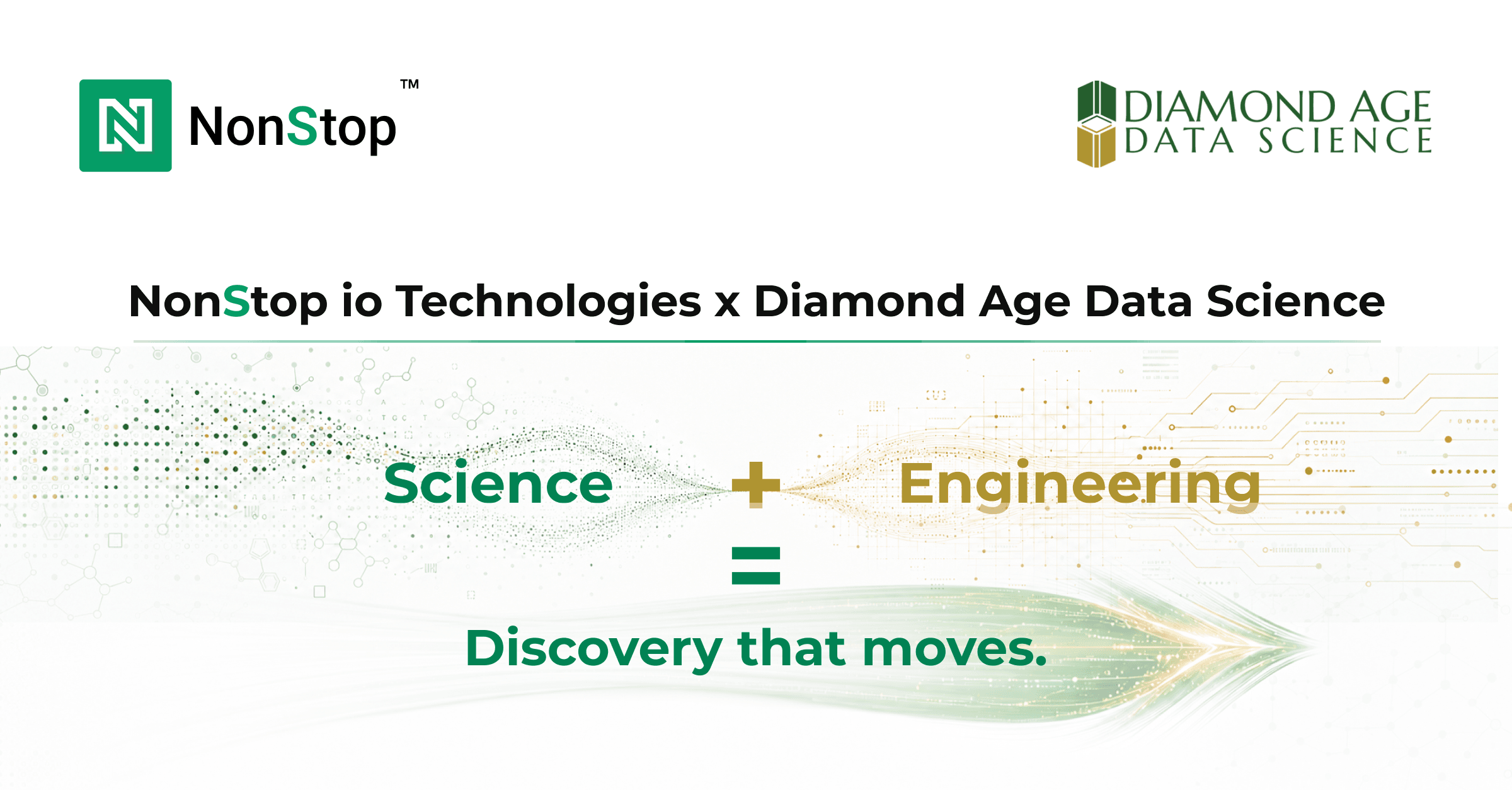
We’re excited to announce a partnership between NonStop and Diamond Age Data Science

Partnership announcement — NonStop and Diamond Age Data Science
Celebrating a Milestone

11 Years of Building with Purpose

Watch our Anniversary Celebration
What’s Next

Production Access for People, Partners, and AI Systems

Next month, we examine what access should look like once an external engineering team or AI tool needs to work with systems containing protected health information, and how to make that access safe, auditable, and workable.

Team reviewing production access on lab workstations